
It’s hard to believe, but with the onset of 2026, Outer Shores Expeditions has entered our 15th year of exploring and experiencing the BC coast with our guests from around the world. And with the arrival of our new-to-us expedition sailing vessel Ocean Wayfinder, 2026 truly marks the beginning of a new chapter, not only for Outer Shores in general, but also for our flagship, the schooner Passing Cloud, as we embark upon a new series of initiatives and adventures with her. My intention for this post is to share a bit about where we’re headed with both Outer Shores and Passing Cloud in the years ahead.
Outer Shores – A Brief History
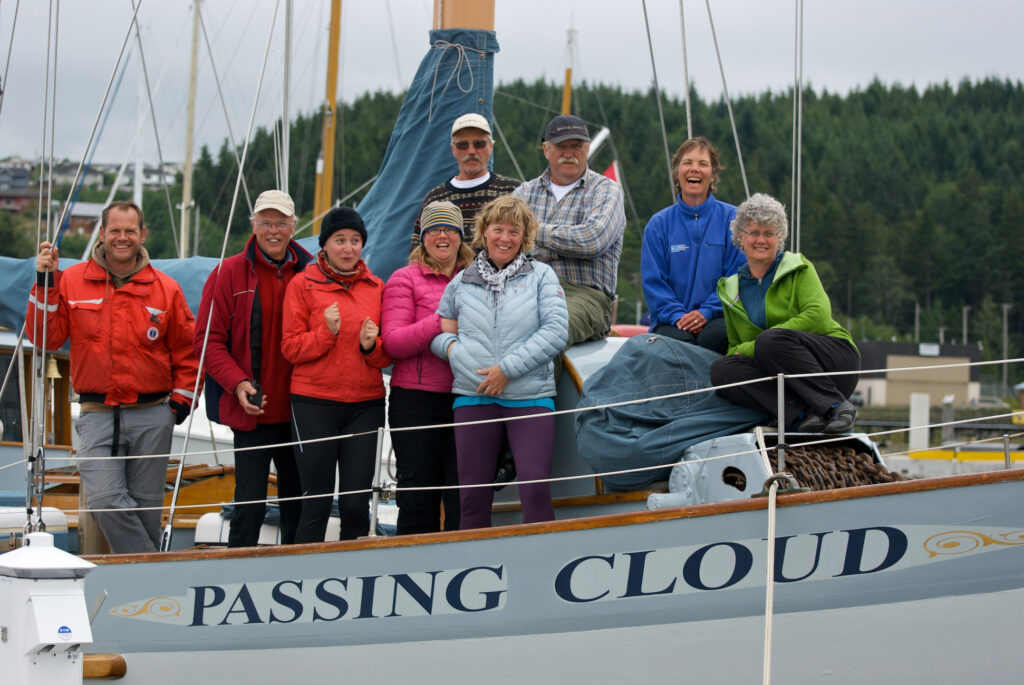
Back in 2012, when we purchased ‘the Cloud’ and established Outer Shores Expeditions, I had just recently completed my PhD in the Department of Zoology, at UBC, where I had been studying the ecosystem-level effects of sea otter reintroduction and recovery, especially as they relate to kelp forest dynamics and the recruitment of marine fishes. And, I was still in the process of finishing my post-doctoral program in the Institute for Resources, Environment, and Sustainability, also at UBC. These were formative and incredibly rewarding years for me. I loved marine science and many aspects of academia, including all the incredible friends and colleagues I had made along the way; however, I had also come to the conclusion that I was more well suited to a career and lifestyle that involved more movement (i.e., less time sitting at my computer), public education, and applied conservation.
From the outset, my vision for Outer Shores Expeditions was to combine my academic training and experience with my parallel careers as a mariner and ecotourism guide. I envisioned Outer Shores providing small-group, ship-based, immersive educational tourism experiences that include science communication delivered by myself, by our guides and expedition specialists, as well as by visiting friends and colleagues. Proudly, this is the reputation we’ve earned over the years and for which we have been recognized through a number of awards. However, I also envisioned Outer Shores eventually also contributing more directly to understanding and conserving the coastal ecosystems of the BC coast, for example, through citizen-science projects and collaboration with academic partners. It’s this latter part of my vision that is starting to come into focus as we embark upon our 15th season with Passing Cloud, and now Ocean Wayfinder.
OCEaNS Fund and Future Science Initiatives
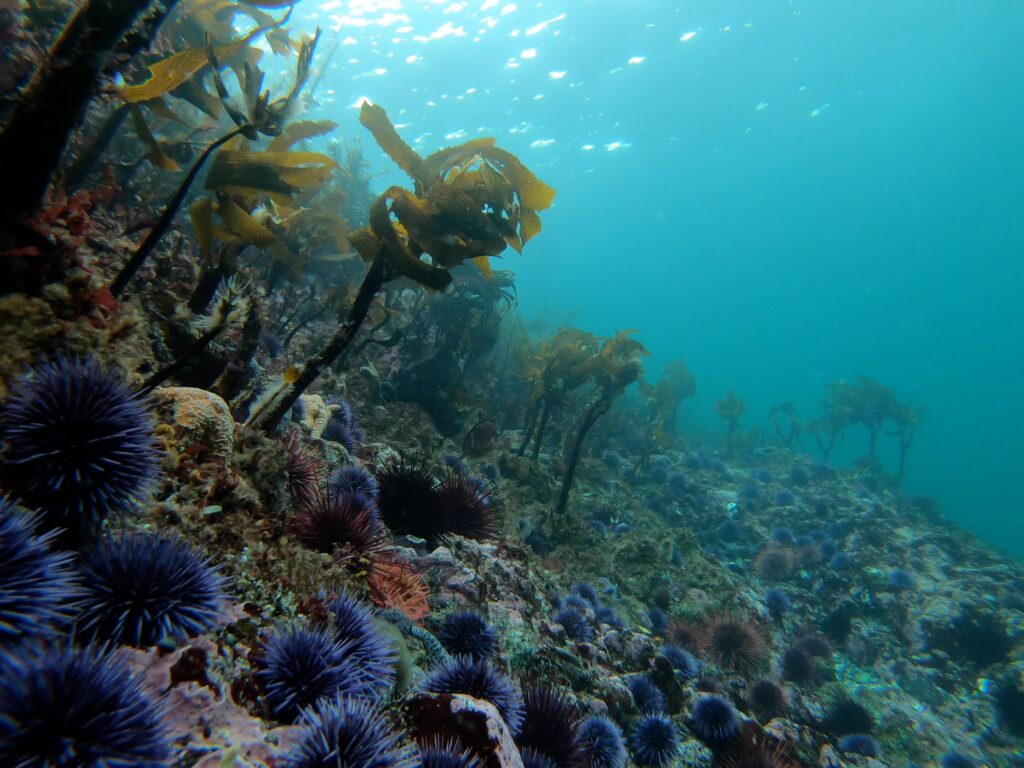
In 2025, we established our “OCEaNS” Fund. This acronym stands for ‘Ocean Conservation, Education, and Nearshore Science’, and the intention behind the fund itself is to create a tourism-generated financing model that allows Outer Shores to support, participate in, and lead research and conservation initiatives on the BC coast. By adding $200 per guest to our expedition fees, we look forward to being able to support graduate student research, create micro-grants, purchase scientific instruments, and leverage these funds to apply for additional sources of funding.
Also in 2025, following in part from the Marine Debris Removal Initiative (MDRI) that Outer Shores undertook and co-led as part of the Small Ship Tour Operators Association (SSTOA) during the pandemic years of 2020 and 2021, we began an industry-led citizen-science initiative aimed at documenting and understanding nearshore ocean hypoxia (i.e., levels of dissolved oxygen) throughout the BC coast. With funding from the Province of British Columbia’s Climate Ready BC Seafood Program, in collaboration with the Small Ship Tour Operators and the Wilderness Tourism Association (WTA), Outer Shores is currently leading this valuable long-term research project aimed at identifying areas of the BC coast that may either be resilient to, or vulnerable to, experiencing hypoxic ocean conditions and implications for associated marine fisheries and wildlife. See here for more information about this exciting project.
Now, as we look to 2027 and beyond, we’re excited to be able to focus Passing Cloud more on supporting these kinds of research and conservation initiatives specifically, as well as continuing to offer tourism-based expeditions. To realize this vision we’re embarking on a multi-year refit aboard our beloved classic wooden schooner.
Passing Cloud Begins Refit for Research Initiatives and Private Expeditions
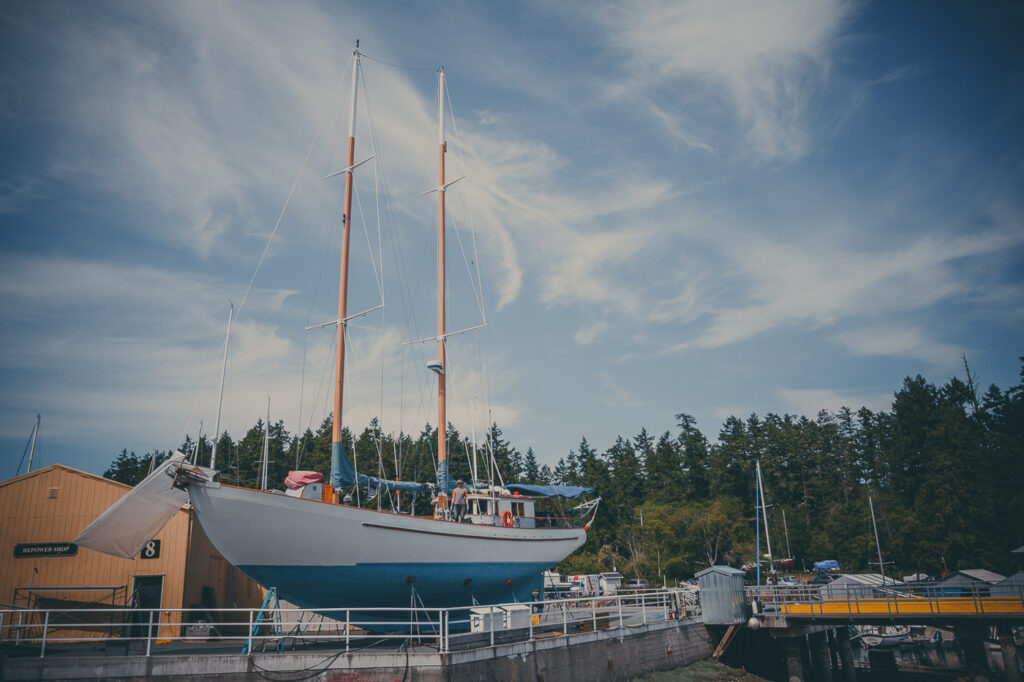
Regardless of the destination, using a vessel for research expeditions can be quite different from tourism-based expeditions. Notably, we’ll want to be able undertake long-distance cruises involving more sailing, as well as spend extended periods of time simply anchored in remote locations while undertaking research activities. To accommodate this range of operational scenarios, we’ll need to change some of our onboard systems and utilization of space. For the purposes of this blog, I’ll keep my description of these projects at a high level, but we’ll be sure to share more specifics of project updates as we proceed.
To enable a number of new activities, the first project that we’ll be undertaking is to convert our midship passenger cabin to a dedicated refrigeration, pantry, and dry storage space. Operationally, this will allow us to remove the freezer and coolers that are currently located on deck, freeing up valuable deck space for research and sailing activities. In addition to research-based expeditions, this change is also necessary if we undertake any offshore passages, to the Sea of Cortez or the Aleutian Islands, as intriguing examples! Related to our pantry/refrigeration project will be a number of associated projects, including; increasing our battery storage capacity and solar panel array, and increasing our fresh water storage capacity. As you can imagine, we’re excited to embark upon these projects, and all the opportunities and adventures they’ll create for Outer Shores and our guests along the way.
Private Expeditions and New Destinations
Beginning in 2028, with the repurposing of our midship cabin complete, Passing Cloud will begin sailing with just four guests, accommodated in our two forward private cabins. This will allow us to offer unique and highly personalized coastal cruising experiences. For example, sailings could consist of just one couple, two couples, a group of four friends, or parents and two children. Private groups will have Passing Cloud all to themselves, and allow us to create itineraries and experiences specifically tailored to their interests and ambitions. Group sizes of just four guests will also allow us to visit locations and communities and have wildlife viewing opportunities and experiences that just aren’t possible with larger groups. Speciality expeditions, such as family trips, wildlife photography, documentary film making, and birding, will also be natural fits for Passing Cloud. As well, we anticipate having many opportunities for our guests to join our more science-focused expeditions.
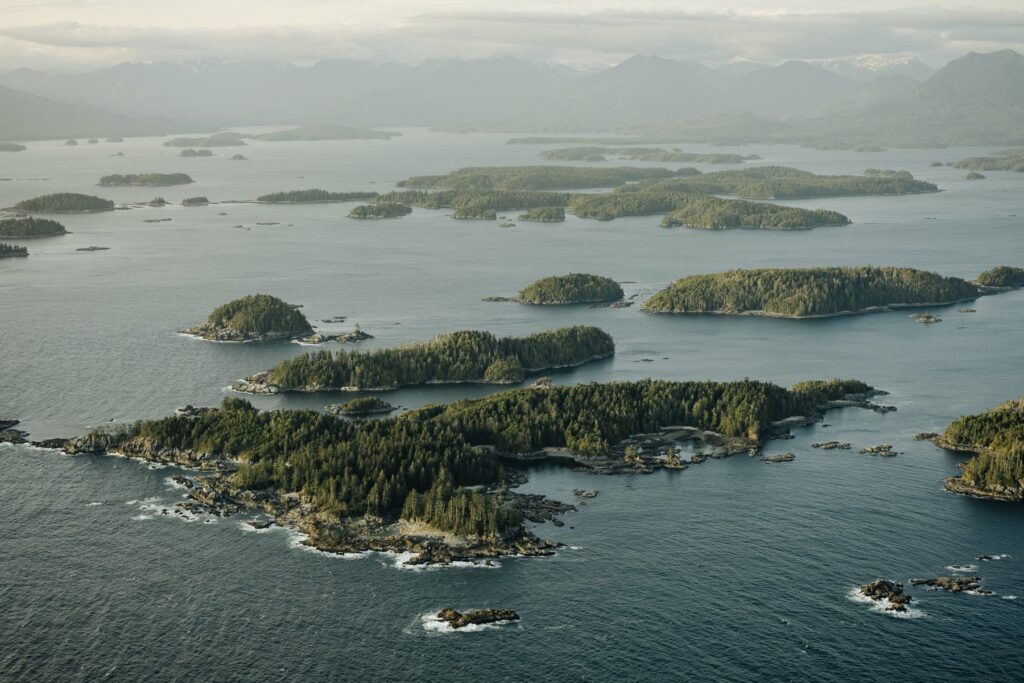
In terms of destinations, we look forward to Passing Cloud being able to visit regions and communities along the BC coast. Although we will continue visiting the Great Bear Rainforest and Haida Gwaii, there are many regions that to date we just haven’t been able to fit into any one expedition season, with the west coast of Vancouver Island being a prime example. For our 2027 expedition season, we are excited to announce that we’ll be returning to Barkley Sound and the Broken Group Islands of Pacific Rim National Park Reserve, with visits to the unique coastal communities of Ucluelet and Bamfield. And for 2028, plans are already underway for finally visiting the Northwest coast of Vancouver Island, Clayoquot, Nookta, and Kyuquots Sounds, and the Brooks Peninsula, all spectacular areas where I studied sea otters, kelp forests, and rocky reef fish ecology during my PhD and Postdoctoral Fellowship.
As always, I am grateful for your interest and being part of our journey and adventures!